
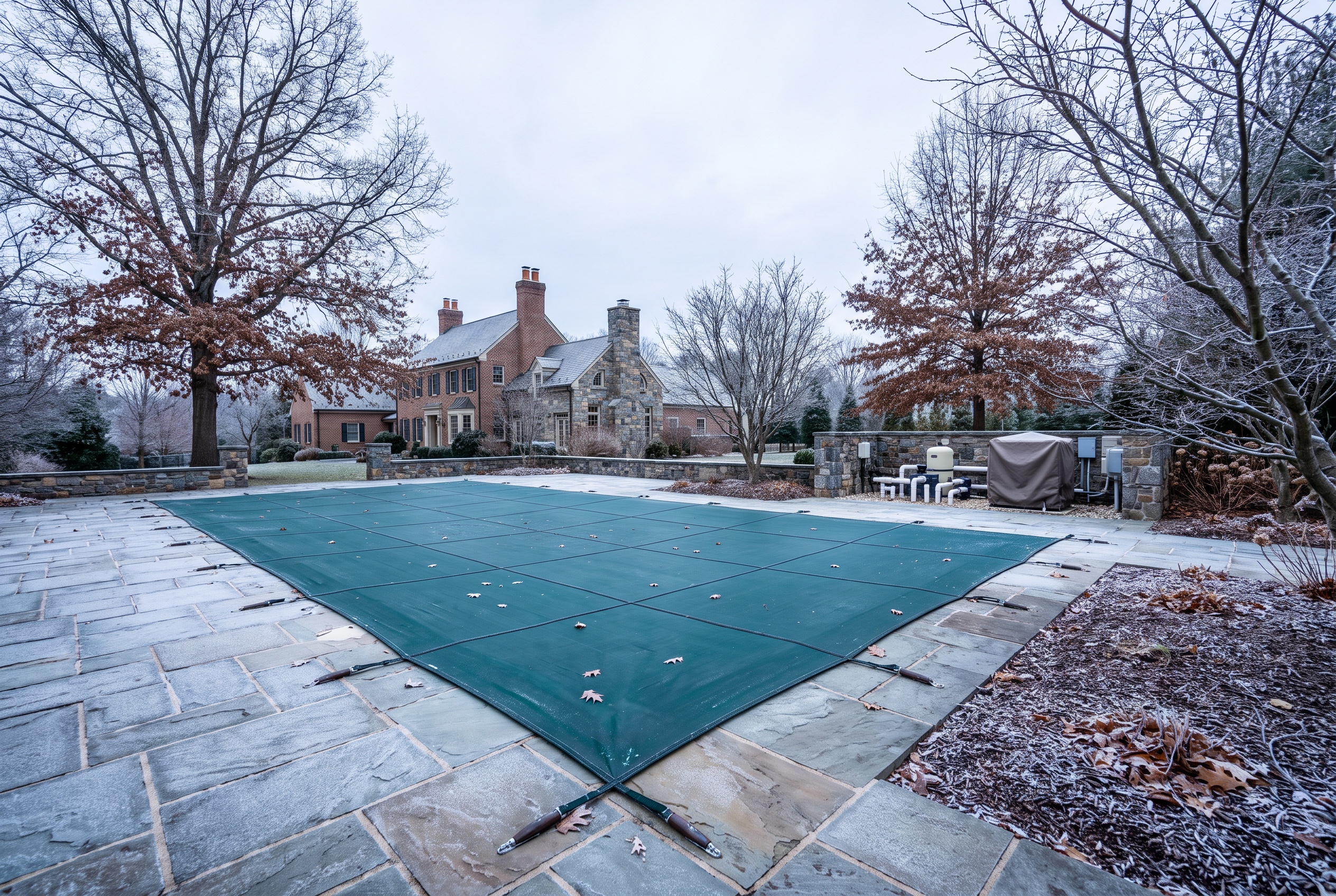
Why Winter Pool Care Does Not End When the Cover Goes On
Good winter pool care continues after the pool has been cleaned, winterized, and covered. A professional closing protects plumbing and equipment from freezing temperatures, but several months of rain, wind, leaves, snow, ice, and changing temperatures can still affect the pool before spring arrives.
Northern Virginia winters are especially variable. A stretch of mild weather may be followed by a hard freeze, then several warmer days. Those repeated temperature swings can expose problems with covers, water levels, equipment, and pool surfaces that were not apparent on closing day.
You don’t need to treat a closed pool like one that is operating in July. Periodic checks, however, can catch small issues before they become unwelcome surprises when the pool is opened again.
Check the Winter Cover Regularly
The winter cover is the most visible part of the closed pool, so it is a good place to start. Look for excessive debris, torn material, loose straps, shifted springs, damaged anchors, or unusual sagging.
Properties with mature trees in McLean, Great Falls, Vienna, and other wooded Northern Virginia communities can accumulate a considerable amount of leaves and small branches through late fall. Allowing heavy, wet debris to sit on the cover for months can add unnecessary weight and make spring cleanup more difficult.
Solid covers may also collect rainwater or melting snow. If your cover uses a pump, make sure it remains clear and operates according to the manufacturer’s instructions. Mesh covers behave differently because precipitation can pass through into the pool.
If you notice torn fabric, failing hardware, or a cover that no longer sits properly, McLean Pool & Spa provides winter safety cover and automatic pool cover service.
Keep an Eye on the Water Level
Water level can change while the pool is closed. Rain and snow may raise it, while evaporation or a leak may cause it to fall. The appropriate level depends partly on the type of cover and how the pool was winterized.
A dramatic or unexplained change deserves attention. If the water level becomes unusually low, there may be a leak. If it rises too far, it may interfere with the way certain covers or winterized components are intended to function.
McLean Pool & Spa’s Winter Watch service includes monitoring and adjusting the pool water level as necessary. This is one reason an off-season inspection can be useful even when the pool appears quiet from the outside.
Inspect the Equipment Area for Winter Damage
Pumps, filters, heaters, valves, and plumbing should have been properly prepared during closing, but the equipment pad is still worth inspecting periodically.
Look for cracked fittings, shifted components, obvious leaks, broken pipes, damaged housings, or anything that appears different after a hard freeze. Avoid attempting to restart winterized equipment simply to test it. If something looks damaged, leave the system shut down and have it inspected professionally.
The U.S. Environmental Protection Agency recommends draining water from pool filters, pumps, heaters, and piping before freezing temperatures arrive as part of proper winterization. Homeowners can review the EPA’s WaterSense home maintenance guidance for additional seasonal pool recommendations.
If you’re unsure whether the pool was prepared correctly, McLean Pool & Spa’s pool closing and winterization service includes blowing and plugging return lines, draining filtration equipment, winterizing skimmers, balancing the water, and installing the winter cover.
Winter Water Chemistry Can Still Change
Closing chemicals and cold water help keep the pool stable through winter, but chemistry doesn’t become permanently fixed once the cover is installed.
Warm stretches can raise the water temperature beneath the cover, organic debris may enter the pool, and rain or snow passing through a mesh cover can alter water levels and chemistry. If conditions change enough, algae may begin developing before spring.
This is particularly important during unusually mild winters or when a pool was closed while the water was still relatively warm. A winter inspection may include pulling back part of the cover, testing the water, removing debris, and adding winter treatment when appropriate.
McLean Pool & Spa’s Winter Watch Program includes water testing and the addition of winter shock or algaecide when needed.
Pay Attention After Major Weather Events
A routine winter check is useful, but certain weather events deserve an extra look.
After strong winds, check for fallen branches or displaced cover hardware. After heavy rain, inspect solid covers for excess standing water. After snow or ice, look for unusual sagging or visible stress without walking onto the cover.
Hard freezes are a good reason to visually inspect the equipment area as well. Northern Virginia’s repeated freeze-thaw pattern can be harder on materials than a consistently cold winter because components may expand and contract again and again.
If you see a broken pipe, cracked fitting, damaged cover, significant water loss, or anything else that suggests winter damage, addressing it before spring can prevent the problem from becoming more complicated.
Do Not Reopen or Disturb Winterized Equipment
One important part of winter pool care is knowing what not to touch. Once plumbing lines and equipment have been properly winterized, avoid removing plugs, opening valves, restarting pumps, or otherwise disturbing the system unless you know exactly how it was closed.
Winter plugs and drained equipment are there to keep water out of vulnerable areas. Accidentally allowing water back into those components before freezing weather is over can undo some of the protection provided during closing.
Visual inspection is usually enough for the homeowner. If something appears wrong, a pool professional can determine whether the winterization needs to be corrected.
Consider a Mid-Winter Pool Check
Many pools make it through winter without any major issues, but a scheduled inspection removes some of the uncertainty. This can be especially useful for homeowners who travel, have heavily wooded properties, use automatic covers, or simply do not want to monitor the pool themselves.
McLean Pool & Spa offers Winter Watch options with one, two, three, or five visits between December and March. The service includes clearing debris, inspecting the cover and anchors, checking equipment for possible winter damage, monitoring water level, testing chemistry, and securing the cover again after service.
That kind of preventive attention can make spring opening much less eventful, which is exactly what you want from a closed pool.
If you would like professional help monitoring your pool through the off-season, contact McLean Pool & Spa to ask about Winter Watch service in Northern Virginia.
FAQ
Do I need to maintain my pool after it has been winterized?
A properly winterized pool needs far less attention than an open pool, but periodic checks of the cover, water level, equipment area, and water condition can help catch problems before spring.
Should I check the water underneath my winter pool cover?
Periodic professional checks can be useful, especially during mild winters or if the water level changes significantly. Water chemistry and debris conditions can still change beneath the cover.
What should I check after a hard freeze?
Visually inspect the equipment area for cracked fittings, damaged pipes, leaks, or shifted components. Also check the cover and its anchors for obvious damage. Do not restart winterized equipment to test it.
Can algae grow in a closed pool during winter?
Yes. Cold water slows algae growth considerably, but warm spells, unbalanced water, organic debris, or a pool that was closed too early can create conditions for algae to develop beneath the cover.