
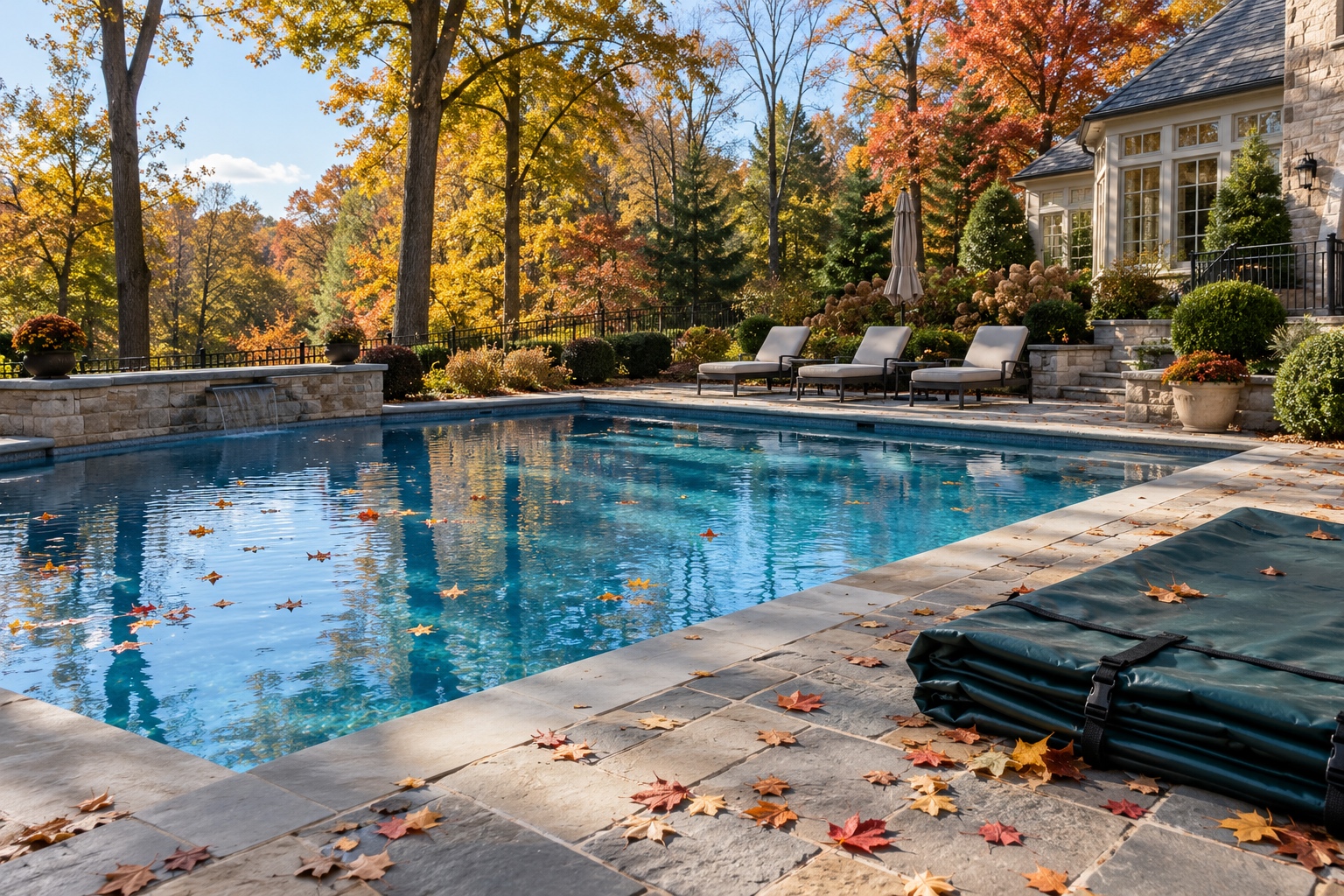
When Should You Close Your Pool in Northern Virginia?
October 2, 2026How to Know When It Is Time to Close Your Pool in Northern Virginia
Knowing when to close your pool in Northern Virginia is less about picking a date on the calendar and more about watching the water, the weather, and how often you are still using the pool. Some years, September stays warm enough for comfortable swimming well into the month. Other years, cool nights arrive early and water temperatures begin dropping quickly.
Closing at the right time helps protect plumbing and equipment from winter damage while giving the water a better chance of staying clear beneath the cover. Close too early, while the water is still warm, and algae may continue growing after circulation stops. Wait too long, and freezing weather can arrive before the plumbing and equipment have been properly winterized.
For homeowners in McLean, Great Falls, Vienna, Oakton, Arlington, and surrounding Northern Virginia communities, the ideal closing window changes somewhat from year to year. That makes water temperature and the forecast more useful than a fixed date.
Watch the Water Temperature, Not Just the Air
A few chilly nights do not necessarily mean pool season is over. Pool water holds heat longer than the surrounding air, especially after a warm summer. Even when morning temperatures feel decidedly autumnal, the pool itself may still be relatively warm.
A common rule of thumb is to wait until the water temperature is consistently around 60°F or lower before closing. Cooler water slows biological activity and makes algae less likely to become established while the pool sits covered and without normal circulation.
That does not mean homeowners should wait indefinitely for the coldest possible water. Winterization should still be completed before freezing temperatures pose a real threat to exposed plumbing and equipment. In Northern Virginia, the sweet spot is often that period when swimming has mostly stopped, the water has cooled substantially, and hard freezes have not yet become an immediate concern.
Why Closing the Pool Too Early Can Cause Problems
Once the pool is closed, normal filtration and sanitation routines change dramatically. If the water is still warm, algae and other organic growth can remain active beneath the cover.
That can turn an otherwise clean fall pool into a green, cloudy surprise when the cover comes off in spring. Starting with clean, properly balanced, cooler water gives winter chemicals a much easier job.
If your family has stopped swimming but the water is still warm, continue basic pool maintenance for a little longer. Keep the water balanced, remove falling leaves and debris, maintain circulation, and watch the temperature rather than rushing into winterization simply because Labor Day has passed.
Waiting Too Long Has Its Own Risks
The other side of the timing equation is freeze protection. Pool plumbing, pumps, filters, heaters, skimmers, and other equipment can contain water even after the swimming season is over. If that water freezes in the wrong place, expansion can damage pipes, fittings, or equipment components.
This is especially relevant in Northern Virginia because fall weather can swing quickly. Pleasant afternoons can give way to much colder nights, and the region’s winter freeze-thaw cycles can be hard on pool systems that were not prepared correctly.
A professional pool closing and winterization involves much more than shutting off the pump and putting on a cover. Plumbing lines need to be protected, filtration equipment drained appropriately, skimmers winterized, water chemistry prepared for the off-season, and the cover installed correctly.
Leaves Can Help Decide the Timing Too
Temperature is the biggest factor, but the trees around your property matter as well. Heavily wooded properties in McLean and Great Falls can see enormous amounts of leaves, acorns, seed pods, and other organic debris once fall gets underway.
If the pool remains open deep into leaf season, skimmers, baskets, and filters may require significantly more attention. Allowing leaves to sit on the floor can also contribute to staining and increase the amount of organic material breaking down in the water.
This does not mean you should close a warm pool simply to avoid raking leaves. Instead, it is another factor to weigh once the water has cooled and regular swimming has largely ended. At that point, closing may save considerable cleanup while protecting the pool for winter.
Prepare the Water Before the Cover Goes On
A good closing starts before winterization day. The pool should be clean, free of heavy debris, and properly balanced. Putting a cover over dirty or poorly balanced water simply gives those problems several months to sit.
Water balance is also important for the pool surface and equipment. Chemistry that is significantly out of range can contribute to scaling, staining, or corrosion while the pool is closed.
Once the pool is prepared, the winter cover becomes the first line of defense against leaves, debris, and accidental entry. The U.S. Department of Energy also notes that pool covers reduce evaporation and heat loss, demonstrating how effectively a physical barrier separates the pool water from outside conditions. Homeowners interested in the broader benefits can review the DOE’s pool efficiency guidance.
If your existing winter or automatic cover is damaged, loose, difficult to operate, or nearing the end of its useful life, McLean Pool & Spa also provides winter safety cover and automatic pool cover service.
Do Not Forget About the Pool After Closing
Winterization protects the pool, but the off-season still deserves occasional attention. Covers can collect debris, water levels can change, anchors and straps can shift, and severe weather can expose problems that were not visible during closing.
McLean Pool & Spa offers a Winter Watch program with off-season visits that can include clearing debris, inspecting covers and anchors, checking equipment for winter damage, monitoring the water level, and testing the water beneath the cover.
That kind of follow-up can be particularly useful for homeowners who travel frequently or simply do not want to wonder what is happening beneath the cover for several months.
Schedule Your Pool Closing Before the Calendar Fills Up
The best time to schedule a closing is often before the exact closing date arrives. Once Northern Virginia nights cool down and water temperatures begin dropping, many homeowners reach the same conclusion at roughly the same time.
You can reserve a closing date while continuing to enjoy the pool until conditions are right. The goal is to avoid closing while the water is unnecessarily warm without waiting so long that an early freeze becomes a scramble.
McLean Pool & Spa provides professional pool closing and winterization throughout Northern Virginia. If your pool is cooling down and swimming season is winding to a close, schedule your closing so the pool, plumbing, equipment, and cover are properly prepared before winter arrives.
FAQ
What temperature should my pool be before I close it?
A common guideline is to wait until the water is consistently around 60°F or lower. Cooler water reduces algae activity, but the pool should still be winterized before freezing weather threatens plumbing or equipment.
Is September too early to close a pool in Northern Virginia?
It can be, depending on the year. If September remains warm and the pool water is still well above 60°F, continuing normal maintenance for a while longer may lead to better water conditions beneath the winter cover.
What happens if I wait too long to winterize my pool?
If freezing weather arrives while water is still trapped in vulnerable plumbing or equipment, expansion can damage pipes, fittings, pumps, filters, heaters, or skimmers. Winterization should be completed before that becomes a risk.
Do I need to clean the pool before closing it?
Yes. Leaves, debris, algae, and poorly balanced water should be addressed before the pool is covered. Starting the winter with clean, balanced water generally makes off-season care and spring opening easier.