
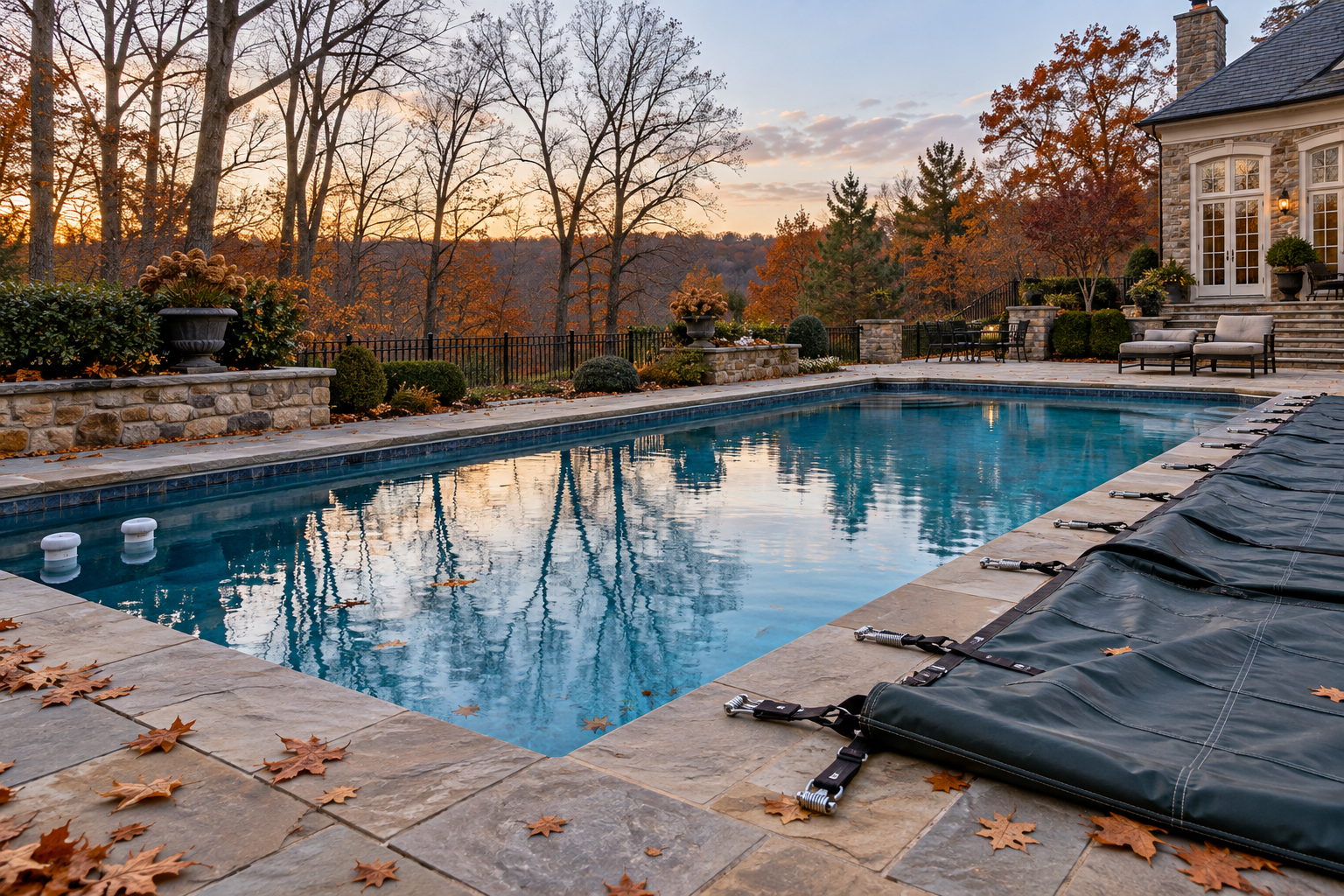
How to Winterize a Pool in Northern Virginia
October 16, 2026What It Takes to Properly Winterize a Pool in Northern Virginia
Learning how to winterize a pool in Northern Virginia means preparing much more than the water itself. A proper closing protects plumbing lines, pumps, filters, heaters, skimmers, pool surfaces, and the cover through months of cold weather and repeated temperature swings.
That matters in Northern Virginia because winter is rarely one long, consistent freeze. Temperatures may drop below freezing at night and climb well above it during the day. Water trapped inside plumbing or equipment can freeze, expand, thaw, and freeze again, placing stress on components that were never meant to hold ice.
Professional winterization is designed to remove or isolate that risk while leaving the pool in good condition for spring. The process starts before the cover goes on.
Clean and Balance the Pool Before Closing
A pool should go into winter clean. Leaves, dirt, algae, and organic debris do not disappear simply because the pool is covered. Left behind for several months, they can contribute to staining, cloudy water, algae growth, and a much more difficult spring opening.
The pool should be skimmed, vacuumed, and brushed before closing. Water chemistry should also be tested and adjusted so pH, alkalinity, sanitizer, and other important levels are appropriate for the off-season.
The U.S. Environmental Protection Agency recommends cleaning pool water, balancing pool chemicals, and using winterization chemicals when needed as part of winter preparation. It also advises draining water from pumps, filters, heaters, and piping before freezing temperatures arrive.
Homeowners can review the EPA’s WaterSense pool maintenance guidance for additional information on seasonal pool care.
Protect the Plumbing From Freezing Water
Plumbing protection is one of the most important parts of professional pool winterization. Water expands when it freezes. If enough water remains trapped inside a return line, skimmer line, fitting, or other plumbing component, that expansion can crack the material or damage connections.
During McLean Pool & Spa’s standard closing process, return lines are blown out and plugged, and skimmers are winterized. The pool water level may also be lowered below the return lines when appropriate, although this is handled differently for pools with solid winter or automatic covers.
This part of winterization requires more than simply draining visible water. Plumbing systems contain bends, low points, valves, and underground sections where water can remain trapped. Proper equipment and technique are needed to clear those lines effectively.
Drain and Shut Down Pool Equipment Correctly
The equipment pad also needs to be prepared for winter. Pumps, filters, heaters, and related components can retain water after the pool is shut down. If that water freezes inside a housing, manifold, heat exchanger, or fitting, the resulting damage may not become apparent until spring.
McLean Pool & Spa’s closing procedure includes draining and removing plugs from the filtration system, powering down equipment, and closing the heater gas valve. These steps help reduce the risk of freeze damage while the system is inactive.
This is also a good time to notice existing problems. Leaks, deteriorated seals, damaged fittings, or equipment that was already struggling at the end of the swimming season should not simply be forgotten beneath a winter cover. McLean Pool & Spa provides pool repair services for pumps, filtration systems, heaters, leaks, and other equipment concerns.
Add Winter Chemicals With a Purpose
Winter chemicals help support water quality while normal circulation and sanitation are suspended. The exact treatment should be based on the pool’s chemistry and condition rather than a one-size-fits-all approach.
McLean Pool & Spa’s closing service includes checking and balancing the water and adding a closing chemical kit. Starting winter with properly prepared water helps limit algae and other water-quality problems beneath the cover.
Timing matters here too. If a pool is closed while the water is still very warm, algae remains more active and can consume sanitizer long after the circulation system has been shut down. Waiting until the water has cooled, while still closing before freeze risk becomes significant, generally creates better conditions for the off-season.
Install the Right Winter Cover
Once the pool and equipment are prepared, the cover becomes the physical barrier between the water and several months of leaves, branches, rain, snow, and other debris.
A winter safety cover should be correctly fitted, anchored, and tensioned. Loose straps, damaged fabric, worn springs, or faulty anchors can prevent the cover from performing as intended.
McLean Pool & Spa installs and services winter safety covers in both mesh and solid fabric options. Our pool cover services also include inspection and service for existing winter and automatic covers.
Cover choice affects winter care as well. Mesh covers allow precipitation through, while solid covers limit water and debris entry differently. Water level and cover condition should therefore be monitored according to the type of system installed.
Winterization Does Not Mean Forgetting the Pool Until Spring
A closed pool still benefits from periodic checks. Heavy leaves can collect on the cover. Anchors can loosen. Water levels can change. Winter storms can damage equipment or introduce debris beneath the cover.
McLean Pool & Spa’s pool maintenance and seasonal services include a Winter Watch Program with off-season visits between December and March. These visits can include removing debris from the cover and deck, checking cover anchors, inspecting equipment for possible winter damage, monitoring water level, and checking water chemistry beneath the cover.
For homeowners who travel frequently or simply do not want to monitor the pool through the coldest months, this can catch problems while there is still time to address them.
Why Professional Pool Winterization Matters
Winterizing a pool correctly is ultimately about avoiding spring surprises. A cracked plumbing line, freeze-damaged heater, displaced cover, or pool full of algae can quickly turn opening day into a repair project.
Professional closing gives each part of the system the attention it needs before freezing temperatures arrive. The pool is cleaned and balanced, plumbing is cleared and protected, equipment is drained, the heater is shut down correctly, skimmers are winterized, and the cover is installed for the months ahead.
If your swimming season is finished and nighttime temperatures are continuing to fall, McLean Pool & Spa can prepare your pool for winter throughout McLean, Great Falls, Vienna, Oakton, and surrounding Northern Virginia communities. Contact McLean Pool & Spa to schedule your professional pool closing and winterization.
FAQ
Do I need to drain my pool completely for winter?
No. Residential pools are generally not completely drained for normal winterization. Water level may be lowered as appropriate for the pool and cover type, while plumbing and equipment are separately cleared and protected.
Why do pool lines need to be blown out?
Water trapped in plumbing can expand when it freezes and damage pipes or fittings. Blowing out and plugging the lines helps remove water from vulnerable plumbing before freezing weather arrives.
Should pool water be balanced before winterizing?
Yes. Cleaning and balancing the water before closing helps protect pool surfaces and improves the chances of maintaining better water quality through the off-season.
Does a winterized pool need maintenance during winter?
Occasional checks are recommended. Covers, water level, equipment, debris, and water chemistry can all change during the winter, particularly after storms or periods of repeated freezing and thawing.