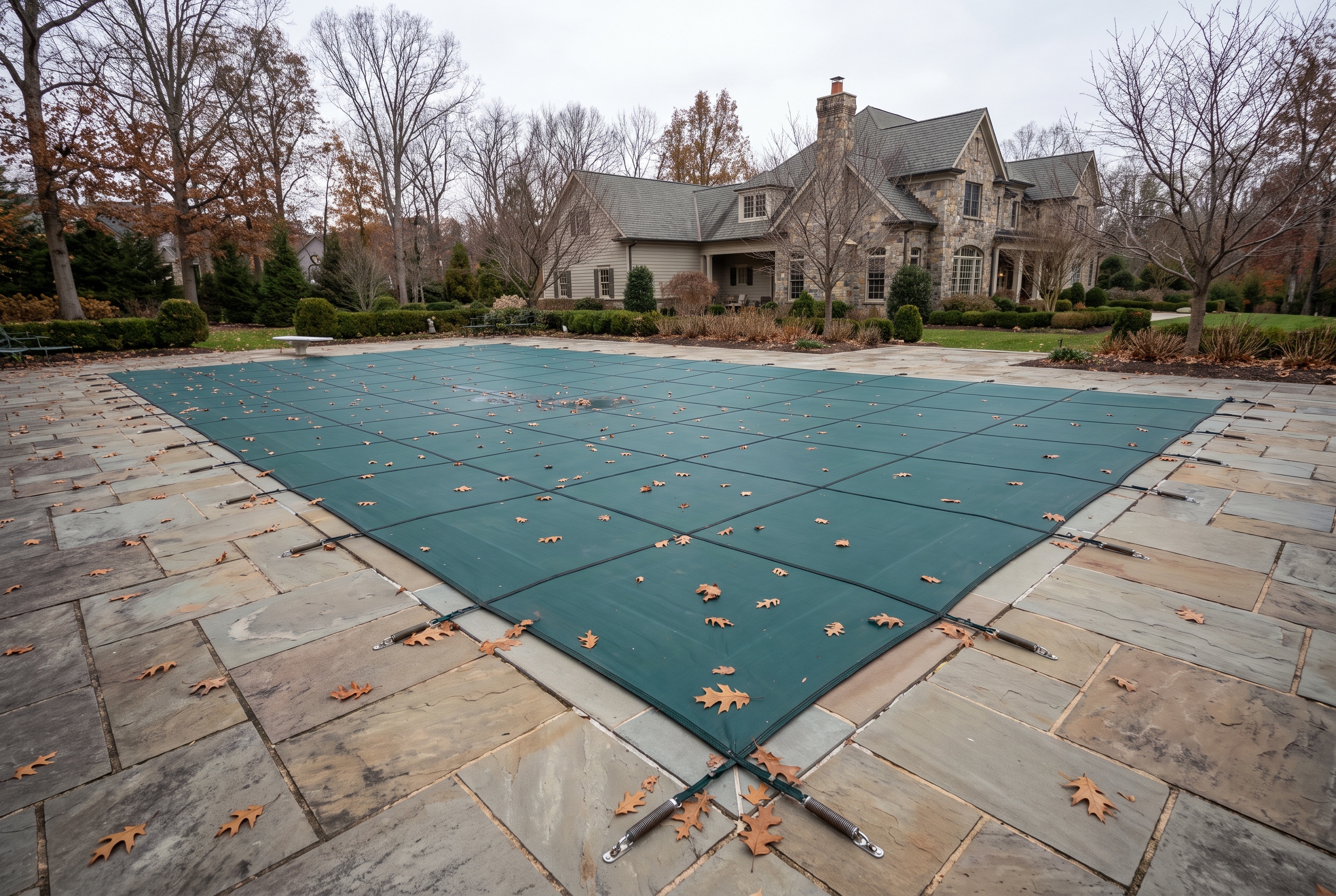
Pool Cover Maintenance: What to Check After Your Pool Is Closed

Why Pool Cover Maintenance Still Matters After Closing Day

Once the pool is winterized and the cover is installed, it is tempting to forget about it until spring. A little pool cover maintenance during the off-season, however, can help protect the cover itself and reveal problems around the pool before they become more difficult to address.

Northern Virginia winters can put a cover through a surprising range of conditions. Falling leaves may be followed by heavy rain, freezing nights, occasional snow, strong winds, and repeated cycles of freezing and thawing. A cover that looked perfect on closing day may need attention after several weeks of autumn debris and changing weather.

Checking the cover periodically does not mean reopening the pool. It simply means making sure the system that is protecting the pool is still doing its job.

Keep Leaves and Heavy Debris From Building Up

Leaves are one of the first challenges after a Northern Virginia pool closes. Properties with mature trees in McLean, Great Falls, Vienna, and surrounding communities can accumulate a substantial amount of debris during late fall.

A few leaves are not an emergency, but allowing wet leaves, branches, acorns, and other material to pile up can place unnecessary weight on the cover. Organic material also holds moisture and can stain or soil cover fabric over time.

Debris should be removed carefully without dragging sharp branches or tools across the cover. How the cover should be cleaned depends on its design and manufacturer recommendations. The goal is to keep excessive material from remaining on the surface for months at a time.

McLean Pool & Spa’s Winter Watch Program includes clearing debris from the pool cover and deck during off-season service visits, along with several other winter checks.

Inspect Straps, Springs, Anchors, and Cover Edges

Winter safety covers depend on more than the fabric itself. The straps, springs, and deck anchors around the pool keep the cover positioned and properly tensioned.

Walk around the perimeter periodically and look for obvious changes. A strap that has gone unusually slack, an anchor that has shifted, a spring that no longer looks properly tensioned, or a cover edge that has moved significantly may need attention.

Also look for tears, worn stitching, frayed straps, damaged hardware, or areas where the material appears to be stretching abnormally. Small problems are generally easier to address before winter weather puts additional stress on the cover.

The Pool & Hot Tub Alliance recommends checking pool covers periodically for damage and maintaining them according to manufacturer instructions. Damaged covers should be repaired or replaced as appropriate.

Pay Attention to Water on Solid Covers

Different types of covers behave differently during rain and snow. Mesh safety covers allow precipitation to pass through into the pool. Solid covers prevent most water from passing through, which means rainwater or melting snow may collect on top.

If your solid cover uses a cover pump, make sure the pump and drainage path remain functional according to the manufacturer’s instructions. Leaves can interfere with drainage, and standing water can add considerable weight to the cover.

Automatic covers have their own maintenance requirements and should also be kept reasonably free of leaves, standing water, and other loads that could strain the fabric or operating mechanism.

If a cover is sagging significantly, damaged, or no longer operating normally, avoid forcing it or attempting major adjustments yourself. McLean Pool & Spa provides winter safety cover and automatic pool cover service, including installation and service for existing covers.

Check the Pool Water Level Beneath the Cover

The cover is only one part of winter pool protection. The water level underneath it matters too.

Water levels can change during the off-season because of precipitation, evaporation, drainage, or a possible leak. Depending on the cover and pool configuration, water that rises too high or falls too low can create problems.

McLean Pool & Spa monitors and adjusts water levels as part of its Winter Watch visits. Their professional pool closing service also accounts for cover type when setting the initial closing water level. For example, their standard closing procedure does not lower the water below the return lines when solid winter or automatic covers are being used.

If the water level changes dramatically after closing, especially without an obvious weather-related explanation, it may be worth having the pool inspected.

Watch for Damage After Storms, Ice, and Snow

Winter weather does not have to be dramatic to affect a pool cover. Wind can move branches onto the surface. Repeated freezing and thawing can turn accumulated water into ice. Snow can conceal debris or damage that was not obvious beforehand.

After significant weather, visually inspect the cover from the deck. Look for unusual sagging, shifted straps, damaged anchors, torn fabric, fallen limbs, or anything else that appears different from before the storm.

Avoid walking onto the cover simply to inspect or clean it. Even when a safety cover is designed as a protective barrier, maintenance should be performed according to its intended use and manufacturer instructions.

Do Not Ignore What Is Happening Under the Cover

Cover maintenance is also an opportunity to think about the pool underneath. A properly winterized pool should not require normal in-season care, but water chemistry and debris conditions can still change over several months.

This is one reason McLean Pool & Spa’s Winter Watch service includes pulling back the cover when appropriate to remove debris, checking water chemistry, adding winter shock or algaecide when needed, inspecting equipment for possible winter damage, and then securing the cover again.

Periodic winter checks can be especially useful after a warm spell. Northern Virginia winters sometimes include stretches of relatively mild weather, and warmer water can increase biological activity beneath the cover.

When a Pool Cover Needs Professional Service

A cover should be inspected professionally if you notice torn fabric, damaged straps or springs, loose or failing anchors, unusual sagging, problems with an automatic cover mechanism, or a cover that no longer fits or tensions the way it did when installed.

Waiting until spring can leave the pool exposed for the remainder of winter and may allow a manageable repair to become more involved.

McLean Pool & Spa installs and services both mesh and solid winter safety covers as well as automatic pool covers throughout Northern Virginia. If your cover has been damaged or you would rather have your closed pool checked periodically through winter, contact McLean Pool & Spa to schedule cover service or a Winter Watch visit.

FAQ

How often should I check my pool cover during winter?

There is no single schedule that fits every property, but it is wise to inspect the cover periodically and after significant storms, heavy leaf fall, snow, ice, or high winds.

Should I remove leaves from my winter pool cover?

Yes. Excessive leaves and other organic debris can hold moisture and add weight to the cover. Remove them carefully using methods appropriate for your particular cover.

Is standing water normal on a solid pool cover?

Some rain or melted snow may collect on a solid cover. If the system uses a cover pump, keep it operating according to manufacturer instructions and prevent debris from interfering with drainage.

When should a winter pool cover be repaired or replaced?

Tears, damaged straps, failing springs or anchors, excessive wear, poor fit, or problems maintaining proper tension are all reasons to have the cover inspected. Automatic covers should also be serviced if their tracks, fabric, or operating mechanism stop working normally.
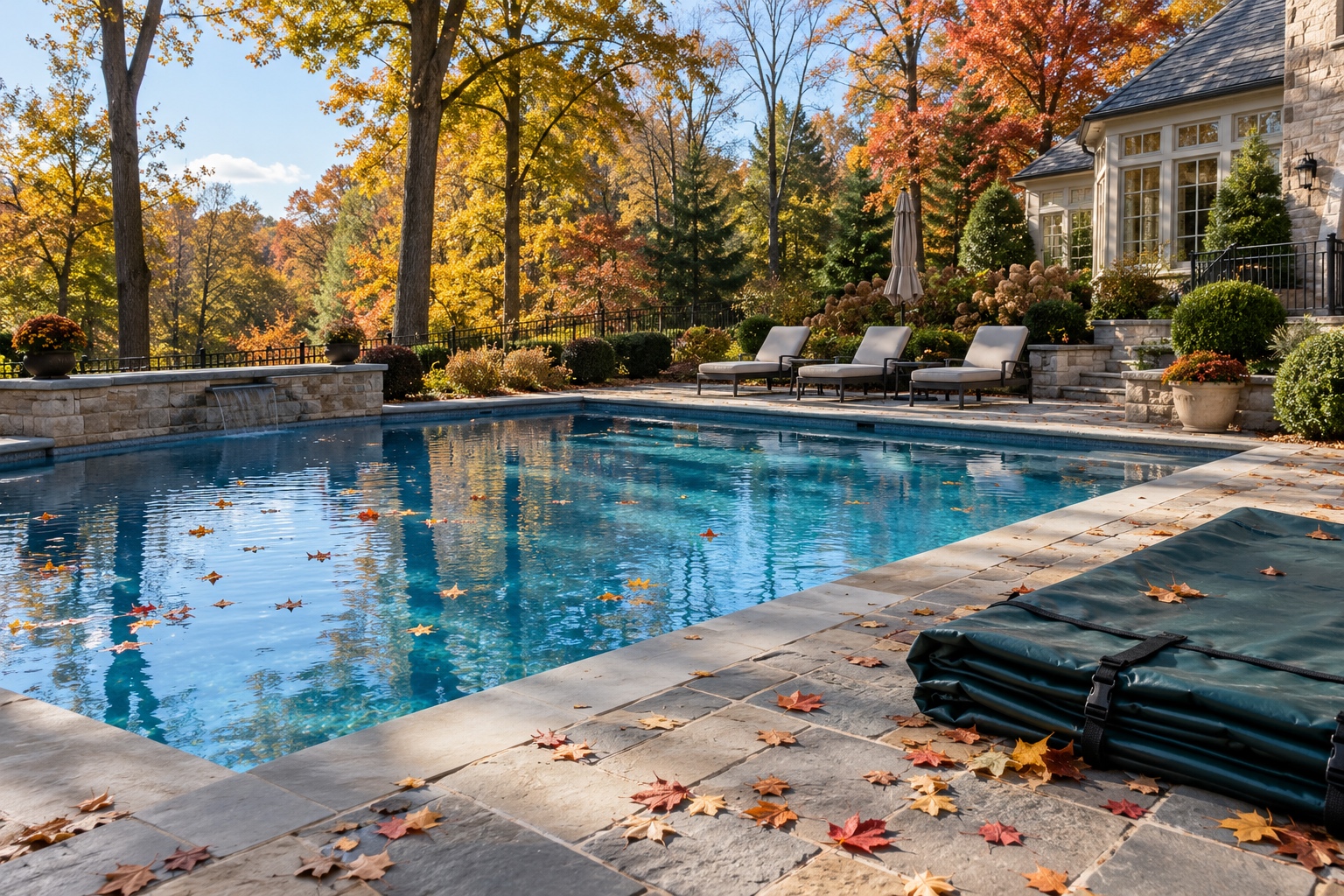
When Should You Close Your Pool in Northern Virginia?

How to Know When It Is Time to Close Your Pool in Northern Virginia

Knowing when to close your pool in Northern Virginia is less about picking a date on the calendar and more about watching the water, the weather, and how often you are still using the pool. Some years, September stays warm enough for comfortable swimming well into the month. Other years, cool nights arrive early and water temperatures begin dropping quickly.

Closing at the right time helps protect plumbing and equipment from winter damage while giving the water a better chance of staying clear beneath the cover. Close too early, while the water is still warm, and algae may continue growing after circulation stops. Wait too long, and freezing weather can arrive before the plumbing and equipment have been properly winterized.

For homeowners in McLean, Great Falls, Vienna, Oakton, Arlington, and surrounding Northern Virginia communities, the ideal closing window changes somewhat from year to year. That makes water temperature and the forecast more useful than a fixed date.

Watch the Water Temperature, Not Just the Air

A few chilly nights do not necessarily mean pool season is over. Pool water holds heat longer than the surrounding air, especially after a warm summer. Even when morning temperatures feel decidedly autumnal, the pool itself may still be relatively warm.

A common rule of thumb is to wait until the water temperature is consistently around 60°F or lower before closing. Cooler water slows biological activity and makes algae less likely to become established while the pool sits covered and without normal circulation.

That does not mean homeowners should wait indefinitely for the coldest possible water. Winterization should still be completed before freezing temperatures pose a real threat to exposed plumbing and equipment. In Northern Virginia, the sweet spot is often that period when swimming has mostly stopped, the water has cooled substantially, and hard freezes have not yet become an immediate concern.

Why Closing the Pool Too Early Can Cause Problems

Once the pool is closed, normal filtration and sanitation routines change dramatically. If the water is still warm, algae and other organic growth can remain active beneath the cover.

That can turn an otherwise clean fall pool into a green, cloudy surprise when the cover comes off in spring. Starting with clean, properly balanced, cooler water gives winter chemicals a much easier job.

If your family has stopped swimming but the water is still warm, continue basic pool maintenance for a little longer. Keep the water balanced, remove falling leaves and debris, maintain circulation, and watch the temperature rather than rushing into winterization simply because Labor Day has passed.

Waiting Too Long Has Its Own Risks

The other side of the timing equation is freeze protection. Pool plumbing, pumps, filters, heaters, skimmers, and other equipment can contain water even after the swimming season is over. If that water freezes in the wrong place, expansion can damage pipes, fittings, or equipment components.

This is especially relevant in Northern Virginia because fall weather can swing quickly. Pleasant afternoons can give way to much colder nights, and the region’s winter freeze-thaw cycles can be hard on pool systems that were not prepared correctly.

A professional pool closing and winterization involves much more than shutting off the pump and putting on a cover. Plumbing lines need to be protected, filtration equipment drained appropriately, skimmers winterized, water chemistry prepared for the off-season, and the cover installed correctly.

Leaves Can Help Decide the Timing Too

Temperature is the biggest factor, but the trees around your property matter as well. Heavily wooded properties in McLean and Great Falls can see enormous amounts of leaves, acorns, seed pods, and other organic debris once fall gets underway.

If the pool remains open deep into leaf season, skimmers, baskets, and filters may require significantly more attention. Allowing leaves to sit on the floor can also contribute to staining and increase the amount of organic material breaking down in the water.

This does not mean you should close a warm pool simply to avoid raking leaves. Instead, it is another factor to weigh once the water has cooled and regular swimming has largely ended. At that point, closing may save considerable cleanup while protecting the pool for winter.

Prepare the Water Before the Cover Goes On

A good closing starts before winterization day. The pool should be clean, free of heavy debris, and properly balanced. Putting a cover over dirty or poorly balanced water simply gives those problems several months to sit.

Water balance is also important for the pool surface and equipment. Chemistry that is significantly out of range can contribute to scaling, staining, or corrosion while the pool is closed.

Once the pool is prepared, the winter cover becomes the first line of defense against leaves, debris, and accidental entry. The U.S. Department of Energy also notes that pool covers reduce evaporation and heat loss, demonstrating how effectively a physical barrier separates the pool water from outside conditions. Homeowners interested in the broader benefits can review the DOE’s pool efficiency guidance.

If your existing winter or automatic cover is damaged, loose, difficult to operate, or nearing the end of its useful life, McLean Pool & Spa also provides winter safety cover and automatic pool cover service.

Do Not Forget About the Pool After Closing

Winterization protects the pool, but the off-season still deserves occasional attention. Covers can collect debris, water levels can change, anchors and straps can shift, and severe weather can expose problems that were not visible during closing.

McLean Pool & Spa offers a Winter Watch program with off-season visits that can include clearing debris, inspecting covers and anchors, checking equipment for winter damage, monitoring the water level, and testing the water beneath the cover.

That kind of follow-up can be particularly useful for homeowners who travel frequently or simply do not want to wonder what is happening beneath the cover for several months.

Schedule Your Pool Closing Before the Calendar Fills Up

The best time to schedule a closing is often before the exact closing date arrives. Once Northern Virginia nights cool down and water temperatures begin dropping, many homeowners reach the same conclusion at roughly the same time.

You can reserve a closing date while continuing to enjoy the pool until conditions are right. The goal is to avoid closing while the water is unnecessarily warm without waiting so long that an early freeze becomes a scramble.

McLean Pool & Spa provides professional pool closing and winterization throughout Northern Virginia. If your pool is cooling down and swimming season is winding to a close, schedule your closing so the pool, plumbing, equipment, and cover are properly prepared before winter arrives.

FAQ

What temperature should my pool be before I close it?

A common guideline is to wait until the water is consistently around 60°F or lower. Cooler water reduces algae activity, but the pool should still be winterized before freezing weather threatens plumbing or equipment.

Is September too early to close a pool in Northern Virginia?

It can be, depending on the year. If September remains warm and the pool water is still well above 60°F, continuing normal maintenance for a while longer may lead to better water conditions beneath the winter cover.

What happens if I wait too long to winterize my pool?

If freezing weather arrives while water is still trapped in vulnerable plumbing or equipment, expansion can damage pipes, fittings, pumps, filters, heaters, or skimmers. Winterization should be completed before that becomes a risk.

Do I need to clean the pool before closing it?

Yes. Leaves, debris, algae, and poorly balanced water should be addressed before the pool is covered. Starting the winter with clean, balanced water generally makes off-season care and spring opening easier.