
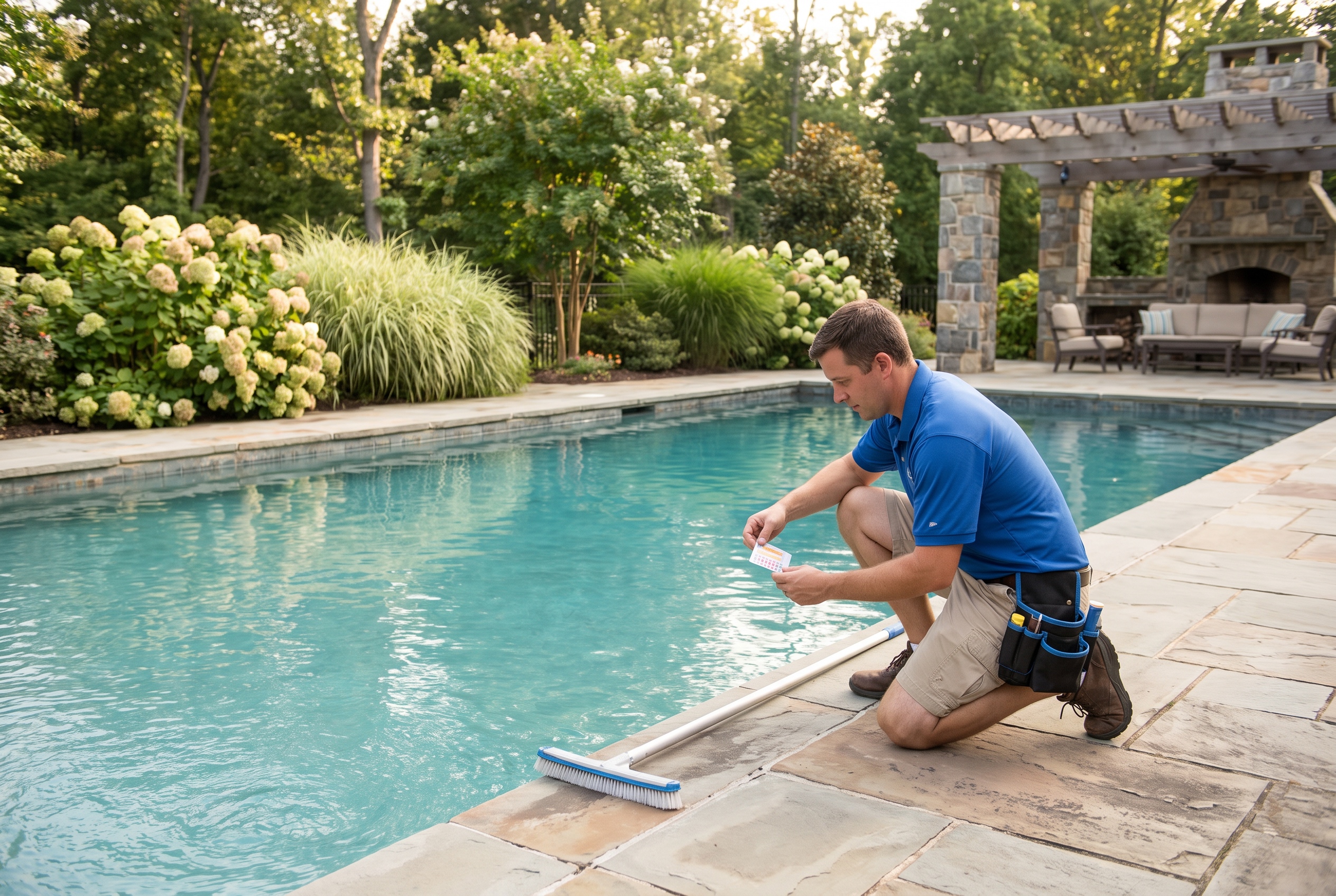
Why Mid Season Pool Maintenance Matters During a Northern Virginia Summer
Mid season pool maintenance is one of the best ways to keep your pool clear, comfortable, and ready to use during the busiest part of the year. By mid-summer, your pool has already been through spring pollen, early-season balancing, storms, heat, heavy swimmer use, and weeks of regular filtration. Even if the water still looks good, the system may be working harder than it did at opening.
For homeowners in McLean, Great Falls, Vienna, Oakton, Arlington, and surrounding Northern Virginia communities, summer pool care is rarely static. Humidity, thunderstorms, wooded lots, sunscreen, leaves, grass clippings, and warm water can all increase the demand on your sanitizer and filtration system. A pool that was easy to manage in May may need more attention by July or August.
Mid-season care is about catching those changes before they become cloudy water, algae growth, equipment strain, or an unexpected service problem right when you want to use the pool most.
Start With Water Chemistry
Water balance is usually the first place to look during mid-summer maintenance. Chlorine, pH, alkalinity, calcium hardness, and stabilizer levels all affect water clarity, comfort, and equipment protection. When these readings drift, the pool may still look acceptable for a short time, but problems can build quickly.
pH is especially important because it affects how well chlorine works. If pH climbs too high, sanitizer can become less effective. If chlorine levels drop too low, algae and organic buildup have more opportunity to develop. The CDC’s home pool and hot tub water treatment guidance recommends maintaining proper pH and sanitizer levels to help keep pool water safe and comfortable.
In Northern Virginia, mid-summer weather can shift chemistry quickly. A heavy thunderstorm may dilute chemicals and add debris. A hot, sunny week may raise chlorine demand. A weekend with guests can introduce sunscreen, lotions, sweat, and other organic material. Regular testing helps prevent these normal summer conditions from turning into water problems.
Check Filtration and Circulation
Clear water depends on more than chemicals. The pool also needs strong circulation and effective filtration. During mid-season, filters may be carrying weeks of pollen, dust, oils, fine debris, and organic material. Skimmer baskets and pump baskets can fill quickly, especially on wooded properties or after storms.
Homeowners should pay attention to weak return flow, poor skimmer action, air bubbles, rising or falling filter pressure, noisy equipment, or water that stays dull even after chemical adjustments. These can be signs that the system is not moving or filtering water as well as it should.
Professional pool maintenance services help keep these details under control with regular cleaning, water chemistry checks, basket cleaning, brushing, vacuuming, filter attention, and visual equipment inspections. Mid-season is an ideal time to make sure the system is still keeping up with the pool’s actual workload.
Brush, Vacuum, and Remove Debris Before It Becomes a Problem
By the middle of the season, pool surfaces can collect more than visible leaves. Fine debris, pollen, dust, algae spores, and organic residue can settle along steps, corners, benches, tile lines, and shaded areas. These areas often have weaker circulation, which makes regular brushing especially important.
Brushing helps loosen material before it clings to surfaces or gives algae a foothold. Vacuuming removes debris from the floor before it breaks down and places more demand on the sanitizer. Skimming and basket cleaning help keep the circulation system from being restricted.
This kind of maintenance may seem routine, but it protects the entire pool system. When debris is allowed to build up, chlorine demand rises, filters work harder, and cloudy water becomes more likely. A clean pool is easier to balance, easier to filter, and less likely to need emergency attention.
Watch for Early Algae and Cloudy Water
Mid-summer is prime time for algae in Northern Virginia. Warm water, humidity, sudden storms, and heavy organic debris can create the right conditions for growth. Algae does not always start as a bright green pool. Often, the first signs are subtle.
Homeowners may notice slightly cloudy water, a slippery feeling on steps, dull-looking walls, or faint green or yellow patches near corners and shaded areas. If brushing creates a dusty cloud from the pool surface, algae may already be starting to develop.
The earlier algae is addressed, the easier it is to control. Waiting until the water turns green usually means more treatment, more filtration time, and more disruption. Mid season pool maintenance helps reduce that risk by keeping sanitizer levels steady, debris under control, and circulation strong.
Inspect Equipment Before Peak Use Takes a Toll
Pool equipment works hard during the middle of summer. Pumps run longer, filters carry more load, heaters may be used for evening comfort, and automation systems may be adjusted more often. A small issue on the equipment pad can become more noticeable during peak use.
Homeowners should listen for unusual pump noise, check for visible leaks, watch for error messages, and look for changes in water flow. If the pool is losing water faster than expected, struggling to stay clear, or showing signs of circulation problems, it may be time for a professional inspection.
McLean Pool & Spa provides pool repair services for issues involving leaks, filtration systems, pumps, heaters, and related equipment. Catching a repair need during mid-season can help prevent a larger interruption later in the summer.
Think Ahead to Late Summer and Fall
Mid-season maintenance also helps set up the rest of the year. A pool that is kept balanced and clean in July is usually easier to manage in August and September. It is also easier to prepare for closing when the water has not been fighting algae, cloudy conditions, or heavy debris for weeks.
If your pool needed extra cleanup after opening, had recurring cloudy water, or has already shown signs of algae, mid-season is a good time to review the maintenance routine. The goal is to avoid carrying summer problems into fall, when leaves and cooler nights add a new layer of stress.
A professional pool opening helps start the season properly, but consistent care through the middle of summer is what keeps the pool dependable when it is being used the most.
Schedule Mid Season Pool Maintenance With McLean Pool & Spa
Mid-summer should be when your pool is at its best. If the water is becoming harder to balance, the filter is struggling, algae keeps trying to appear, or the equipment does not seem to be performing normally, professional service can help restore confidence in the system.
McLean Pool & Spa helps homeowners throughout McLean, Great Falls, Vienna, Oakton, Arlington, and surrounding Northern Virginia communities keep their pools clean, balanced, and ready to enjoy. To schedule mid-season service or have a technician inspect your pool, contact McLean Pool & Spa today.
FAQ
What is mid season pool maintenance?
Mid season pool maintenance is a focused checkup during the busiest part of pool season. It typically includes water testing, chemical balancing, brushing, vacuuming, basket cleaning, filter attention, and equipment inspection.
Why does my pool need extra care in the middle of summer?
Heat, humidity, storms, pollen, debris, and frequent swimming all increase the demand on your pool’s sanitizer and filtration system. Mid-summer conditions can cause water chemistry to change quickly.
How can I tell if my pool filter needs attention?
Signs may include cloudy water, weak return flow, poor skimmer action, unusual filter pressure, or water that does not clear after normal treatment. A professional can inspect the filter and circulation system to identify the cause.
Can mid-season maintenance prevent algae?
It can greatly reduce the risk. Regular brushing, water testing, sanitizer control, debris removal, and strong circulation all help prevent algae from gaining a foothold during hot, humid weather.