
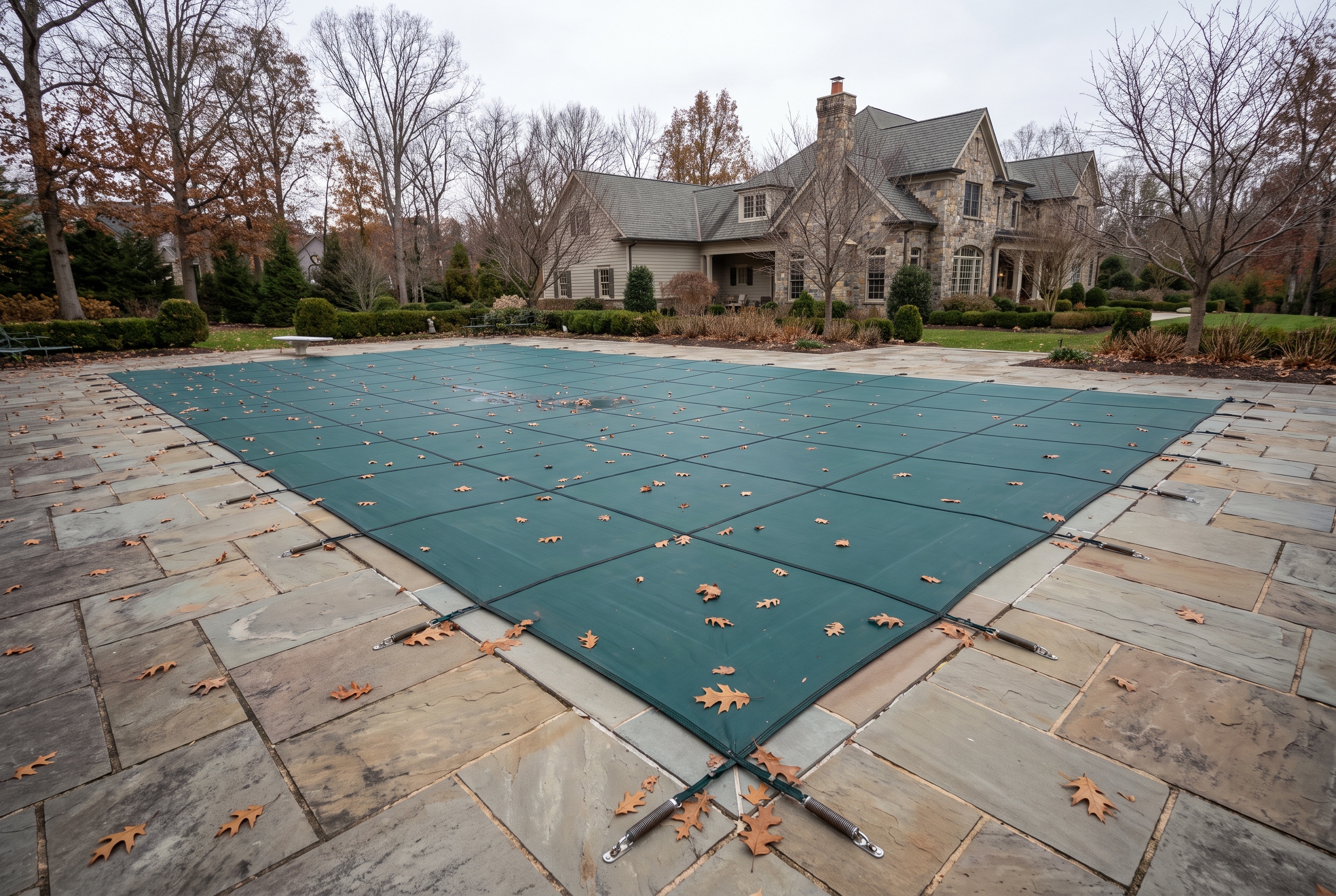
Pool Cover Maintenance: What to Check After Your Pool Is Closed
October 30, 2026Why Pool Cover Maintenance Still Matters After Closing Day
Once the pool is winterized and the cover is installed, it is tempting to forget about it until spring. A little pool cover maintenance during the off-season, however, can help protect the cover itself and reveal problems around the pool before they become more difficult to address.
Northern Virginia winters can put a cover through a surprising range of conditions. Falling leaves may be followed by heavy rain, freezing nights, occasional snow, strong winds, and repeated cycles of freezing and thawing. A cover that looked perfect on closing day may need attention after several weeks of autumn debris and changing weather.
Checking the cover periodically does not mean reopening the pool. It simply means making sure the system that is protecting the pool is still doing its job.
Keep Leaves and Heavy Debris From Building Up
Leaves are one of the first challenges after a Northern Virginia pool closes. Properties with mature trees in McLean, Great Falls, Vienna, and surrounding communities can accumulate a substantial amount of debris during late fall.
A few leaves are not an emergency, but allowing wet leaves, branches, acorns, and other material to pile up can place unnecessary weight on the cover. Organic material also holds moisture and can stain or soil cover fabric over time.
Debris should be removed carefully without dragging sharp branches or tools across the cover. How the cover should be cleaned depends on its design and manufacturer recommendations. The goal is to keep excessive material from remaining on the surface for months at a time.
McLean Pool & Spa’s Winter Watch Program includes clearing debris from the pool cover and deck during off-season service visits, along with several other winter checks.
Inspect Straps, Springs, Anchors, and Cover Edges
Winter safety covers depend on more than the fabric itself. The straps, springs, and deck anchors around the pool keep the cover positioned and properly tensioned.
Walk around the perimeter periodically and look for obvious changes. A strap that has gone unusually slack, an anchor that has shifted, a spring that no longer looks properly tensioned, or a cover edge that has moved significantly may need attention.
Also look for tears, worn stitching, frayed straps, damaged hardware, or areas where the material appears to be stretching abnormally. Small problems are generally easier to address before winter weather puts additional stress on the cover.
The Pool & Hot Tub Alliance recommends checking pool covers periodically for damage and maintaining them according to manufacturer instructions. Damaged covers should be repaired or replaced as appropriate.
Pay Attention to Water on Solid Covers
Different types of covers behave differently during rain and snow. Mesh safety covers allow precipitation to pass through into the pool. Solid covers prevent most water from passing through, which means rainwater or melting snow may collect on top.
If your solid cover uses a cover pump, make sure the pump and drainage path remain functional according to the manufacturer’s instructions. Leaves can interfere with drainage, and standing water can add considerable weight to the cover.
Automatic covers have their own maintenance requirements and should also be kept reasonably free of leaves, standing water, and other loads that could strain the fabric or operating mechanism.
If a cover is sagging significantly, damaged, or no longer operating normally, avoid forcing it or attempting major adjustments yourself. McLean Pool & Spa provides winter safety cover and automatic pool cover service, including installation and service for existing covers.
Check the Pool Water Level Beneath the Cover
The cover is only one part of winter pool protection. The water level underneath it matters too.
Water levels can change during the off-season because of precipitation, evaporation, drainage, or a possible leak. Depending on the cover and pool configuration, water that rises too high or falls too low can create problems.
McLean Pool & Spa monitors and adjusts water levels as part of its Winter Watch visits. Their professional pool closing service also accounts for cover type when setting the initial closing water level. For example, their standard closing procedure does not lower the water below the return lines when solid winter or automatic covers are being used.
If the water level changes dramatically after closing, especially without an obvious weather-related explanation, it may be worth having the pool inspected.
Watch for Damage After Storms, Ice, and Snow
Winter weather does not have to be dramatic to affect a pool cover. Wind can move branches onto the surface. Repeated freezing and thawing can turn accumulated water into ice. Snow can conceal debris or damage that was not obvious beforehand.
After significant weather, visually inspect the cover from the deck. Look for unusual sagging, shifted straps, damaged anchors, torn fabric, fallen limbs, or anything else that appears different from before the storm.
Avoid walking onto the cover simply to inspect or clean it. Even when a safety cover is designed as a protective barrier, maintenance should be performed according to its intended use and manufacturer instructions.
Do Not Ignore What Is Happening Under the Cover
Cover maintenance is also an opportunity to think about the pool underneath. A properly winterized pool should not require normal in-season care, but water chemistry and debris conditions can still change over several months.
This is one reason McLean Pool & Spa’s Winter Watch service includes pulling back the cover when appropriate to remove debris, checking water chemistry, adding winter shock or algaecide when needed, inspecting equipment for possible winter damage, and then securing the cover again.
Periodic winter checks can be especially useful after a warm spell. Northern Virginia winters sometimes include stretches of relatively mild weather, and warmer water can increase biological activity beneath the cover.
When a Pool Cover Needs Professional Service
A cover should be inspected professionally if you notice torn fabric, damaged straps or springs, loose or failing anchors, unusual sagging, problems with an automatic cover mechanism, or a cover that no longer fits or tensions the way it did when installed.
Waiting until spring can leave the pool exposed for the remainder of winter and may allow a manageable repair to become more involved.
McLean Pool & Spa installs and services both mesh and solid winter safety covers as well as automatic pool covers throughout Northern Virginia. If your cover has been damaged or you would rather have your closed pool checked periodically through winter, contact McLean Pool & Spa to schedule cover service or a Winter Watch visit.
FAQ
How often should I check my pool cover during winter?
There is no single schedule that fits every property, but it is wise to inspect the cover periodically and after significant storms, heavy leaf fall, snow, ice, or high winds.
Should I remove leaves from my winter pool cover?
Yes. Excessive leaves and other organic debris can hold moisture and add weight to the cover. Remove them carefully using methods appropriate for your particular cover.
Is standing water normal on a solid pool cover?
Some rain or melted snow may collect on a solid cover. If the system uses a cover pump, keep it operating according to manufacturer instructions and prevent debris from interfering with drainage.
When should a winter pool cover be repaired or replaced?
Tears, damaged straps, failing springs or anchors, excessive wear, poor fit, or problems maintaining proper tension are all reasons to have the cover inspected. Automatic covers should also be serviced if their tracks, fabric, or operating mechanism stop working normally.