
Pool Pump Problems: Signs Your Pump Needs Repair or Replacement
August 14, 2026Common Pool Pump Problems Homeowners Should Not Ignore
Pool pump problems can affect almost every part of your swimming pool. When the pump is working properly, it moves water through the filter, helps distribute chemicals, supports heating and sanitation, and keeps the pool from becoming stagnant. When it starts to fail, the symptoms may show up as cloudy water, weak circulation, algae growth, equipment noise, or a pool that becomes harder to keep balanced.
For homeowners in McLean, Great Falls, Vienna, Oakton, Arlington, and surrounding Northern Virginia communities, pump performance is especially important during the middle of summer. Heat, humidity, storms, pollen, leaves, and frequent swimming all increase the workload on the pool system. If the pump cannot keep water moving consistently, small water-quality problems can grow quickly.
Some pump issues are simple maintenance problems. Others point to a repair need or an aging pump that may be nearing replacement. The key is knowing which warning signs deserve attention before the pool becomes cloudy, green, or unusable.
Why the Pool Pump Matters So Much
The pool pump is the circulation engine of the pool. It pulls water from the skimmers and main drain, pushes it through the filter, and returns clean, treated water back to the pool. Without steady circulation, chlorine and other chemicals cannot distribute evenly, debris is harder to remove, and the filter cannot do its job effectively.
A struggling pump can make other parts of the system look like the problem. Homeowners may assume they have a chemical issue when the real issue is weak circulation. They may keep adding products to the water, only to see the same cloudy water or algae return because the pool is not moving and filtering properly.
That is why pump performance should be checked whenever water clarity, algae, or filtration problems keep coming back. The pump does not work alone, but when it falls behind, the rest of the pool usually feels it.
Warning Signs of Pool Pump Problems
One of the clearest warning signs is weak return flow. If the jets feel weaker than usual, the pump may not be moving enough water. This can happen because of clogged baskets, a dirty filter, an air leak, a blocked line, a worn impeller, or a pump that is losing performance.
Noise is another common clue. A pool pump should not screech, grind, rattle, hum loudly, or sound like it is working harder than normal. Unusual noise may point to bad bearings, motor problems, debris inside the impeller, vibration, or a pump that is struggling to prime.
Air bubbles returning to the pool can also signal trouble. A few bubbles during startup may not be unusual, but steady air in the return lines often means air is entering the system somewhere. That may come from a loose pump lid, worn O-ring, low water level, plumbing issue, or suction-side leak.
Other warning signs include a pump that shuts off unexpectedly, loses prime, overheats, leaks around the housing, trips a breaker, or fails to start. If the water keeps turning cloudy despite normal treatment, the pump and filtration system should be inspected.
How Pump Issues Affect Water Clarity
Pool water needs movement. When circulation slows down, debris and fine particles remain suspended longer, sanitizer does not reach every part of the pool evenly, and algae has more opportunity to develop in corners, steps, benches, and shaded areas.
This is especially noticeable during Northern Virginia summers. A thunderstorm can wash debris into the pool. A humid week can raise sanitizer demand. Heavy use can add sunscreen, lotions, sweat, and organic material. If the pump is already underperforming, the pool may not recover well from those normal summer conditions.
Regular pool maintenance services help catch these problems early through cleaning, water chemistry checks, basket cleaning, filter attention, and visual equipment inspections. Maintenance cannot prevent every repair, but it can reveal changes in flow, sound, pressure, or water clarity before they become larger problems.
Repair or Replacement: How Professionals Evaluate the Pump
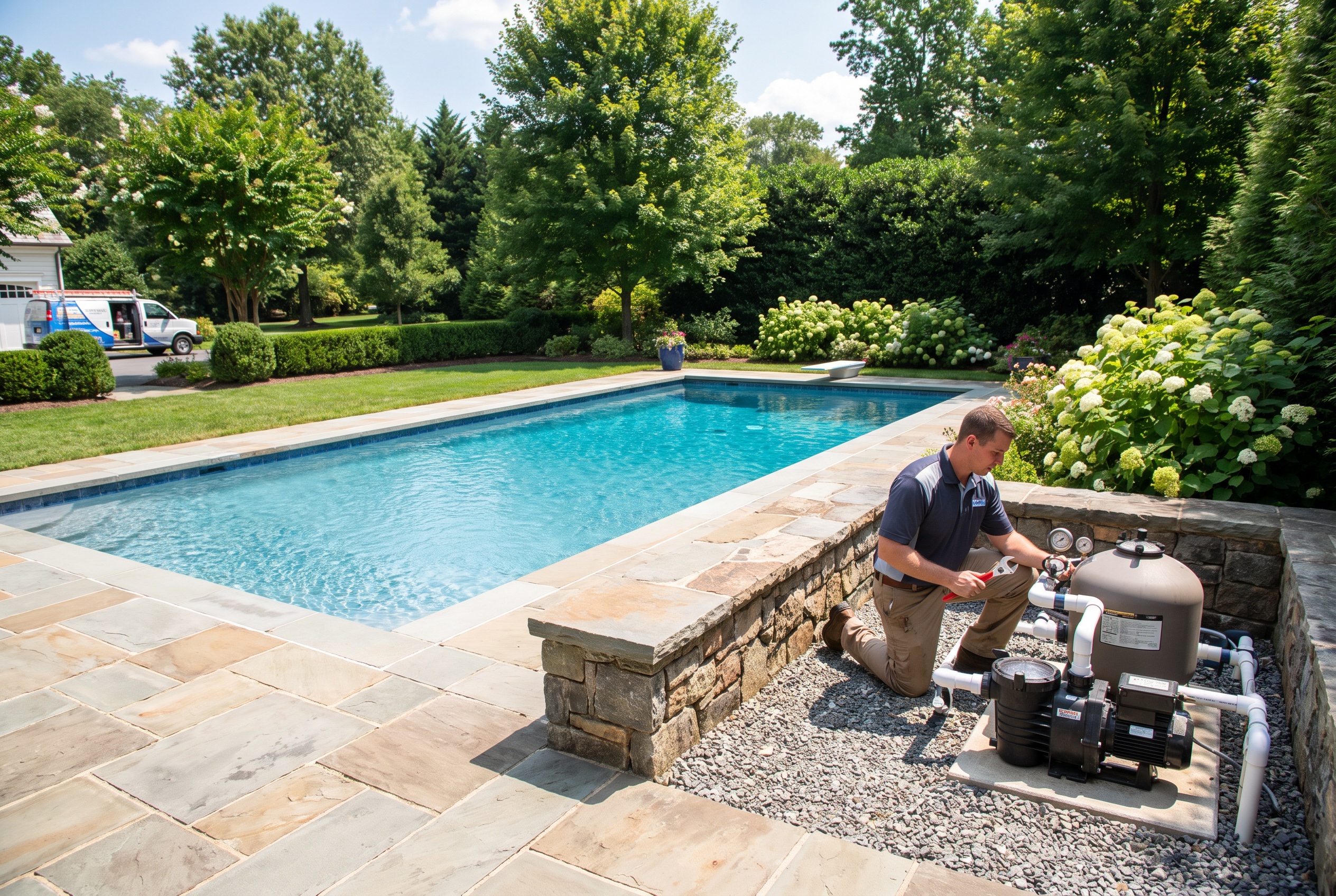
A professional evaluation starts with the basics. The technician may check water level, skimmer baskets, pump basket, pump lid, O-rings, filter pressure, visible leaks, return flow, valves, and the condition of the motor. Sometimes the cause is as simple as restricted flow from debris or a seal that needs attention.
If the motor is noisy, overheating, leaking, or failing to start reliably, repair may be needed. If the pump is older, inefficient, repeatedly failing, or poorly matched to the pool, replacement may make more sense than continuing to repair it.
Energy use can also be part of the conversation. ENERGY STAR explains that variable-speed and multi-speed pool pumps can reduce energy costs, run more quietly, require less maintenance, and support better filtration at slower circulation rates compared with conventional single-speed pumps. ENERGY STAR’s pool pump guidance is a useful resource for homeowners comparing modern pump options.
McLean Pool & Spa provides pool repair services for pumps, filtration systems, heaters, leaks, automation, and related equipment. A technician can inspect the current system and recommend whether repair or replacement is the better long-term option.
Why Pool Pump Problems Are Worse During Peak Summer
Mid-summer is when the pool asks the most from the pump. The water is warmer, the pool is used more often, debris loads are higher, and chemical demand is less forgiving. A pump that seemed adequate in spring may start showing problems once it is running longer and working against summer conditions.
Wooded properties in McLean and Great Falls may see more leaves, seeds, pollen, and organic debris in the pool. Pools in full sun may need more consistent circulation to support sanitizer performance. After storms, baskets and filters can load up quickly. If those restrictions are not addressed, the pump has to work harder to move water.
That extra strain can expose weak seals, aging motors, poor priming, clogged impellers, or filter problems. This is one reason homeowners should take flow changes seriously during the busiest part of the season.
What Homeowners Can Check Before Calling for Service
There are a few simple things homeowners can check safely before scheduling service. Make sure the pool water level is high enough for the skimmer to draw properly. Empty the skimmer baskets and pump basket. Look for obvious debris around the pump area. Check whether the pump lid is secure and whether the filter pressure looks unusual compared with normal operation.
Homeowners should not open electrical components, force stuck valves, disassemble the pump motor, or continue running equipment that is overheating, leaking heavily, or tripping breakers. Those issues should be handled by a professional.
If the pump still sounds wrong, loses prime, shows weak flow, or the water does not clear after normal maintenance, it is time for a proper inspection. Pool equipment problems rarely improve by being ignored. They usually wait until the hottest weekend of the season, then decide to start causing problems.
Schedule Pool Pump Service in Northern Virginia
If you are dealing with pool pump problems, weak circulation, cloudy water, or equipment that does not sound right, McLean Pool & Spa can help. Our team serves homeowners throughout McLean, Great Falls, Vienna, Oakton, Arlington, and surrounding Northern Virginia communities.
Whether your pump needs cleaning, repair, troubleshooting, or replacement, professional service can help protect water clarity and keep your pool ready for summer use. To schedule an inspection or service visit, contact McLean Pool & Spa today.
FAQ
What are the most common signs of pool pump problems?
Common signs include weak return flow, unusual noise, air bubbles, leaks, overheating, loss of prime, cloudy water, poor skimmer action, or a pump that will not start reliably.
Can a bad pool pump cause cloudy water?
Yes. If the pump is not moving water properly, the filter cannot remove debris efficiently and chemicals may not circulate evenly. That can lead to cloudy water, algae growth, and recurring water-balance problems.
Should I repair or replace my pool pump?
That depends on the pump’s age, condition, efficiency, repair history, and whether it is properly sized for the pool. A professional inspection can help determine whether repair or replacement is the better choice.
Why does my pool pump keep losing prime?
A pump may lose prime because of low water level, air leaks, a loose pump lid, worn O-rings, clogged baskets, plumbing restrictions, or other suction-side problems. If it keeps happening, the system should be inspected.