
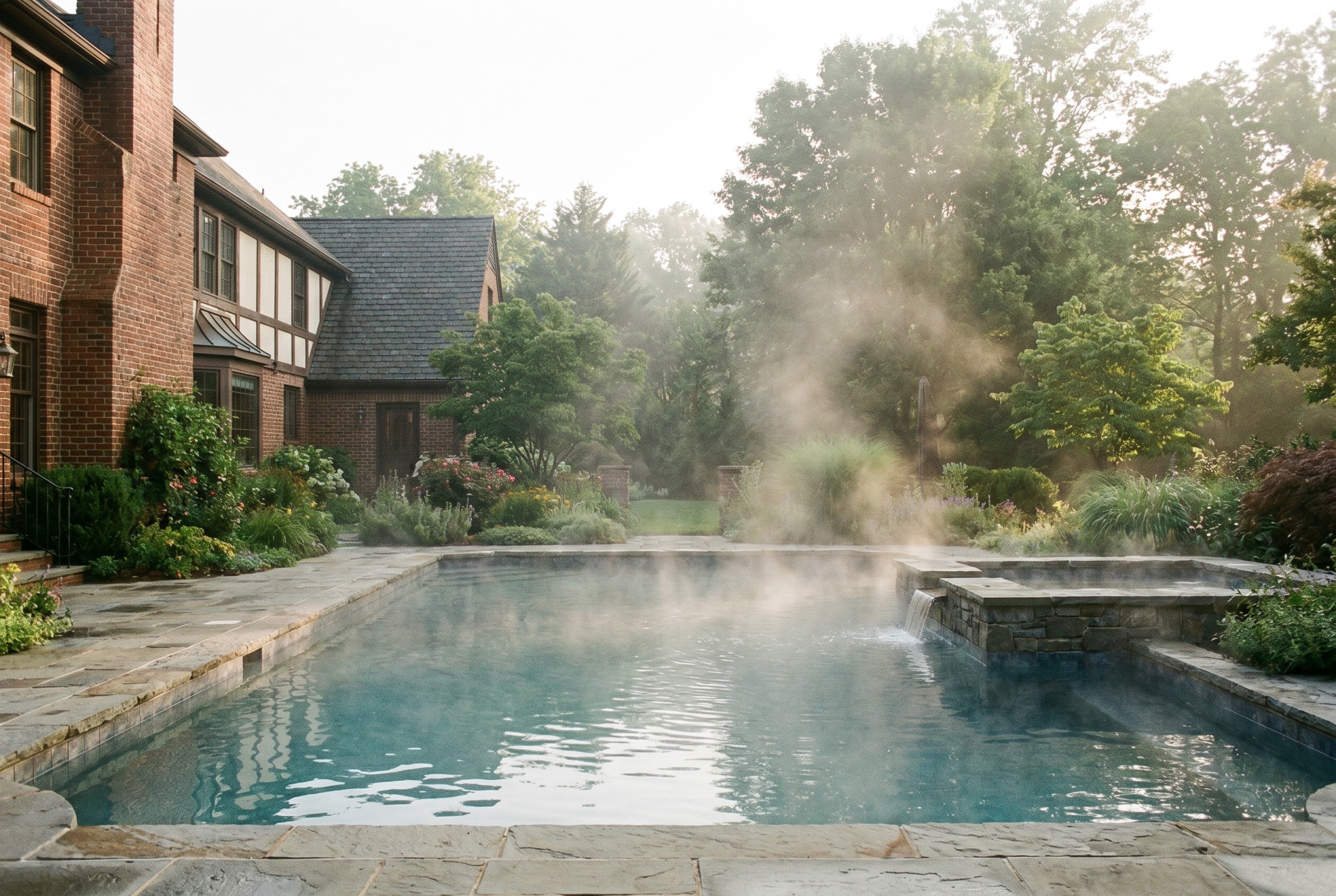
Pool Heater Installation Benefits for Northern Virginia Homeowners
May 28, 2026Pool Heater Installation
Pool heater installation can make a major difference in how often Northern Virginia homeowners are able to enjoy their pools. In this region, pool season often feels shorter than it should. Spring can be slow to warm up, early fall evenings can cool quickly, and even a beautiful pool may go unused when the water temperature is uncomfortable.
A properly selected pool heater gives homeowners more control over their backyard. Instead of waiting for several weeks of warm weather before the pool feels inviting, a heating system can help make the water comfortable earlier in spring, later into fall, and during cooler stretches of summer.
For many homeowners in McLean, Great Falls, Vienna, Oakton, Arlington, and surrounding Fairfax County communities, the question is not just whether a heater can warm the pool. The better question is whether the right heating system can make the pool more usable, more reliable, and better matched to the way the family actually uses the space.
Why Pool Temperature Matters More Than Homeowners Realize
Clear water and beautiful surroundings are important, but comfort often determines whether a pool gets used. A pool can look perfect and still sit empty if the water feels too cold for morning swims, evening use, young children, guests, or older family members.
Northern Virginia’s climate adds to that challenge. Warm afternoons may be followed by cooler nights, especially in spring and fall. Shaded properties, wooded lots, and pools surrounded by mature landscaping may also warm more slowly than open, sunny pools. Even during summer, heavy rain and cloudy weather can bring the water temperature down enough to interrupt regular use.
A swimming pool heater helps reduce that guesswork. Homeowners can plan gatherings, swim after work, or enjoy a more comfortable weekend without depending entirely on several days of perfect weather.
The Main Benefits of Pool Heater Installation
The most obvious benefit of pool heater installation is a longer swimming season. In Northern Virginia, that can mean opening the pool with more confidence in spring and continuing to enjoy it into the fall when daytime temperatures are still pleasant but the water no longer stays warm on its own.
A heater can also improve everyday comfort. Many families find that a pool gets used more often when the water temperature is predictable. Children may stay in longer, guests may feel more comfortable, and homeowners may be more likely to use the pool for exercise or relaxation instead of waiting for the hottest part of the day.
There is also a lifestyle benefit. A pool is a significant investment in the home. If cold water limits its use to only the warmest weeks of the year, the homeowner may not be getting the full value from that investment. A properly installed heating system helps make the pool feel less seasonal and more like a dependable part of the outdoor living space.
Choosing the Right Pool Heating System
There are several ways to heat a pool, and the right choice depends on the property, pool size, usage habits, budget, and performance expectations. Common options include gas pool heaters, electric heat pumps, and in some cases solar-assisted heating systems.
Gas heaters are often valued for speed. They can raise water temperature quickly, which may be helpful for homeowners who use the pool occasionally or want fast heating before a weekend gathering. Heat pumps usually work more gradually, but they can be efficient for maintaining comfortable water temperatures over time, especially when air temperatures are mild.
The U.S. Department of Energy notes that pool heating can consume a lot of energy and that homeowners can improve efficiency by choosing an efficient pool heater and reducing heating costs through proper operation and maintenance. Homeowners can read more from the Department of Energy’s swimming pool heating and maintenance guidance.
For homeowners considering a new heater, McLean Pool & Spa can evaluate how the pool is currently used, how quickly the water needs to heat, and what type of system makes the most sense. In some cases, a heater may also pair well with broader pool equipment upgrades, such as updated controls, automation, or more efficient circulation equipment.
Warning Signs Your Current Pool Heater May Need Attention
Some homeowners already have a pool heater, but it may not be performing the way it should. A heater that struggles to reach the set temperature, shuts off unexpectedly, makes unusual noises, shows error codes, or takes much longer than usual to warm the water should be inspected.
Other warning signs can be easier to miss. Rising energy costs, inconsistent water temperature, corrosion around equipment, poor water flow, or frequent service calls may all point to a heater that is aging, improperly sized, or affected by another equipment issue.
Pool heaters depend on proper circulation, clean filters, balanced water chemistry, and safe equipment operation. If the pump, filter, plumbing, or controls are not working correctly, the heater may not perform well either. That is why heater concerns should be evaluated as part of the entire pool system, not as an isolated box on the equipment pad.
How Pool Maintenance Supports Heater Performance
A pool heater works best when the rest of the pool is properly maintained. Poor water chemistry can contribute to scaling, corrosion, and reduced equipment life. Restricted flow from dirty filters, clogged baskets, or circulation problems can also interfere with heater operation.
Regular pool maintenance helps protect the heater by keeping water balanced, debris under control, and equipment issues easier to catch early. This is especially important in Northern Virginia, where spring pollen, summer storms, heavy tree cover, and fall leaves can all increase the workload on the pool system.
Seasonal service matters as well. During a spring pool opening, the heater and related equipment should be checked before the pool is used heavily. If the system has sat through winter, early inspection can help identify ignition problems, flow issues, leaks, or other concerns before the homeowner is depending on the heater for regular use.
Is Pool Heater Installation Worth It?
For many Northern Virginia homeowners, pool heater installation is worth considering if the pool feels underused because of cold water. It can be especially valuable for families who want to swim earlier in spring, continue later into fall, entertain more comfortably, or use the pool for fitness and relaxation outside the hottest part of summer.
The value depends on choosing the right system. A heater should be sized correctly, installed properly, and matched to the pool’s plumbing, equipment, and usage patterns. A system that is too small may struggle to keep up. A system that is poorly installed may create frustration instead of comfort.
McLean Pool & Spa helps homeowners evaluate their current equipment, compare heating options, and determine whether a pool heater is the right upgrade. If you are ready to make your pool more comfortable and usable throughout more of the year, contact McLean Pool & Spa to discuss your options.
FAQ
Does a pool heater extend the swimming season in Northern Virginia?
Yes. A pool heater can help homeowners use their pools earlier in spring and later into fall by keeping the water at a more comfortable temperature during cooler weather.
What type of pool heater is best?
The best pool heater depends on how quickly you want the water heated, how often you use the pool, your energy preferences, pool size, and existing equipment. Gas heaters and heat pumps each have different advantages.
Can a pool heater be added to an existing pool?
In many cases, yes. A professional should evaluate the pool’s plumbing, electrical or gas access, equipment pad, pump, filter, and controls before recommending the right heating system.
Does a pool heater need maintenance?
Yes. A pool heater should be inspected regularly, and the pool should be kept properly balanced and filtered. Good water chemistry and circulation help protect heater performance and equipment life.