
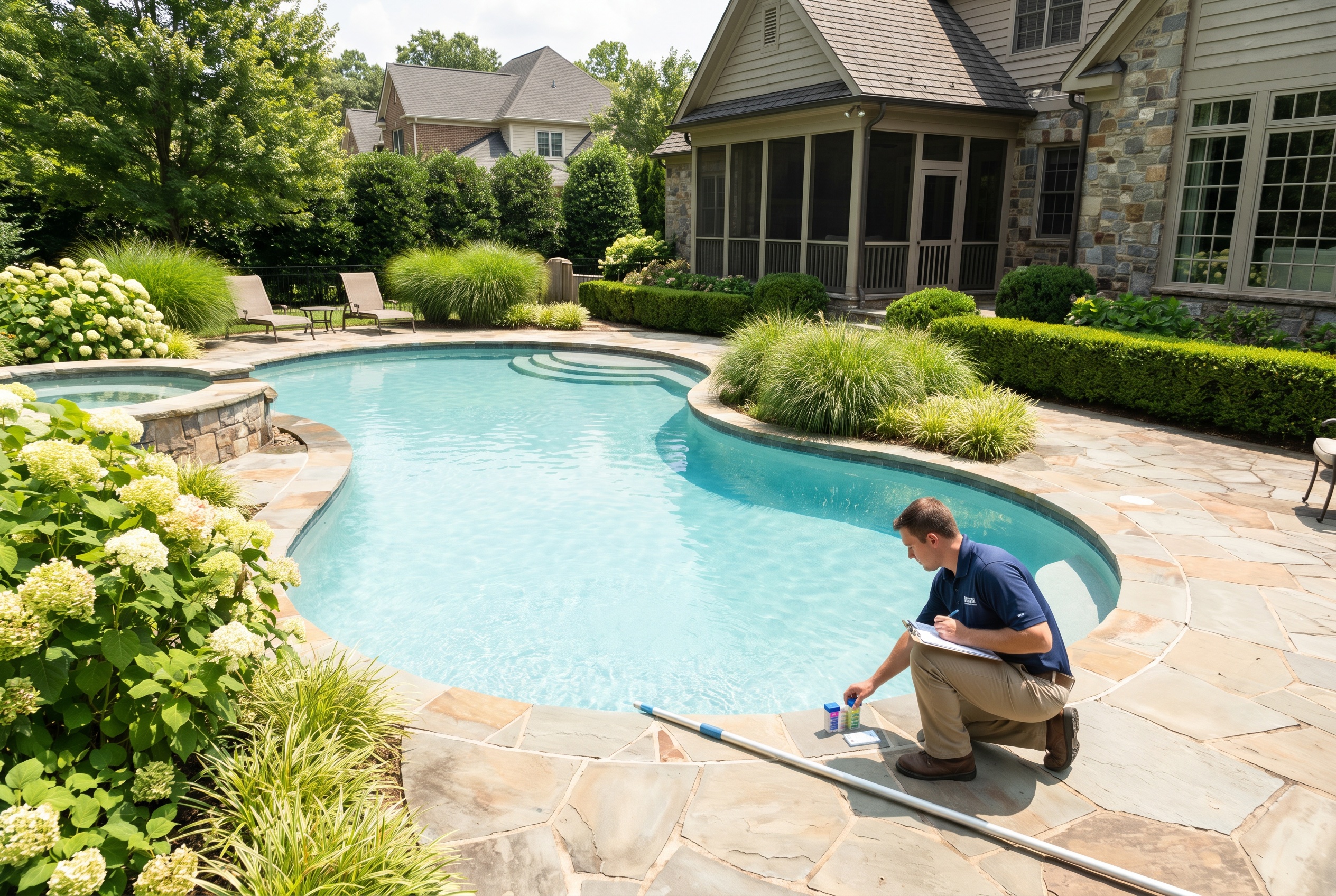
Essential Guide to Swimming Pool Maintenance and Repair
April 28, 2026Swimming Pool Maintenance and Repair: How to Keep Your Pool Clean, Efficient, and Problem-Free
A swimming pool should feel like one of the easiest parts of enjoying your home, not another system you have to constantly worry about. But behind clear water and a comfortable backyard is a combination of chemistry, circulation, filtration, cleaning, equipment performance, and seasonal care.
That is why swimming pool maintenance and repair are so closely connected. Routine maintenance helps keep your pool clean and safe, but it also gives trained technicians the chance to catch small problems before they turn into larger repairs. A clogged basket, low water level, drifting pH, noisy pump, or small leak may not seem urgent at first. Left alone, those issues can strain equipment, damage surfaces, waste water, or make the pool harder to balance.
For homeowners in McLean, Great Falls, Vienna, Arlington, and surrounding Northern Virginia communities, professional care is especially important because the region’s weather creates real seasonal stress. Pollen-heavy springs, humid summers, falling leaves, and freeze-thaw cycles can all affect pool water, equipment, plumbing, masonry, tile, and finishes.
Here is what homeowners should know about keeping a pool clean, efficient, and problem-free throughout the year.
Swimming Pool Maintenance and Repair Starts With Prevention
The best pool repairs are often the ones you never need. Preventive maintenance helps protect your pool by keeping each part of the system working the way it should.
A well-maintained pool is not just a pool that looks clean. It is a pool with balanced water, clear circulation, functional equipment, clean baskets, proper filtration, and surfaces that are regularly brushed and inspected. When those basics are handled consistently, the entire system is less likely to experience avoidable wear.
For example, water that is out of balance can affect more than swimmer comfort. If pH, alkalinity, calcium hardness, or sanitizer levels drift too far, the water may become aggressive toward plaster, tile, coping, metal components, and equipment. On the other hand, poorly managed water can also contribute to scaling, cloudy water, or algae growth.
Professional pool maintenance services help homeowners stay ahead of these issues with routine cleaning, water testing, chemical balancing, equipment checks, and ongoing service recommendations. Instead of reacting only when something breaks, maintenance creates a regular rhythm of inspection and correction.
Why Water Chemistry Affects More Than Water Clarity
Clear water is important, but clarity alone does not tell the whole story. A pool can look acceptable while still being chemically unbalanced. That is one reason regular testing matters.
Water chemistry affects sanitation, swimmer comfort, surface protection, and equipment life. If sanitizer levels are too low, the water may become unsafe or more vulnerable to algae. If pH is too high or too low, chlorine may become less effective, surfaces may be irritated, and equipment may experience avoidable stress. The CDC’s home pool and hot tub water treatment guidance notes that proper pH and sanitizer levels are essential for helping pool water stay safe and comfortable.
Northern Virginia pools also face seasonal changes that can affect water chemistry quickly. Spring pollen, summer storms, heavy tree cover, high humidity, and frequent use can all introduce organic material into the water. Sunscreen, lotions, leaves, grass, and debris may place additional demand on the filtration and sanitation systems.
That is why pool care should not rely on a “set it and forget it” approach. The pool’s chemical balance needs to be monitored and adjusted as conditions change. Homeowners who want a more detailed local overview can also read about pool maintenance in Northern Virginia and how regional conditions affect ongoing pool care.
How Routine Cleaning Helps Protect Pool Equipment
Equipment efficiency matters, too. ENERGY STAR notes that certified pool pumps are designed to save energy, reduce operating costs, run quieter, and help support the life of the pool’s filtering system. Routine cleaning does more than improve the way the pool looks. It helps protect the equipment that keeps the pool running.
When skimmer baskets, pump baskets, filters, and circulation pathways become restricted, the system has to work harder to move water. Poor circulation can lead to cloudy water, inefficient filtration, uneven chemical distribution, and added strain on pumps and motors. Over time, that strain can contribute to breakdowns or shorten equipment life.
Brushing, skimming, vacuuming, emptying baskets, checking the filter, and monitoring water levels all help the system operate more efficiently. These tasks may seem simple, but they are part of the pool’s larger mechanical health. A pool is a connected system, and small maintenance gaps can ripple outward into larger performance problems.
For example, a dirty filter can reduce circulation. Reduced circulation can make chemical treatment less effective. Poor chemical distribution can allow algae to form. Algae then places even more demand on the filter and sanitizer. What began as a maintenance issue can quickly become a repair or recovery issue.
Common Pool Repair Warning Signs Homeowners Should Watch For
Even with regular maintenance, pools can still develop repair needs. The key is catching those warning signs early.
Homeowners should pay attention to changes such as:
- A pump that becomes unusually loud, hot, or inconsistent
- Air bubbles returning through the pool jets
- A heater that struggles to reach or maintain temperature
- Cloudy water that does not improve with normal treatment
- Water level dropping faster than expected
- Lights, automation, or controls that stop working properly
- Visible cracks, loose coping, missing tile, or worn plaster
- Weak water flow from returns or poor skimmer action
These signs do not always point to a major problem, but they should not be ignored. A small air leak, failing pump seal, clogged line, damaged light fixture, or equipment issue can become more expensive if the system continues operating under stress.
If your pool is losing water, your equipment is unreliable, or your system is no longer performing the way it should, professional pool repair services can help identify the source of the problem and recommend the right solution.
Seasonal Pool Maintenance in Northern Virginia
Swimming pool maintenance and repair needs also change throughout the year. In Northern Virginia, each season brings different risks.
In spring, pools often need extra attention after months of winter cover. Water chemistry may be far out of balance, debris may have entered the pool, and equipment should be inspected before regular use begins. A professional pool opening service gives technicians a chance to restart the system properly, evaluate water condition, and look for signs of winter-related damage.
In summer, pools experience peak demand. Heat, sunlight, storms, and frequent swimming can make water harder to manage. Filters may need more attention, sanitizer demand may increase, and equipment runs for longer periods. Mid-season maintenance is especially important because this is when small problems can become disruptive quickly.
In fall, leaves and organic debris can overwhelm baskets and filtration systems if they are not managed carefully. This is also the time to start thinking about closing, winter protection, and any repairs that should be handled before freezing temperatures arrive.
In winter, the pool may be closed, but it should not be forgotten. Water level, cover condition, equipment protection, and freeze-related concerns can all affect how well the pool emerges in spring.
For homeowners comparing service options across the region, McLean Pool & Spa has also covered what to expect from professional pool service in Fairfax VA, including how local conditions can affect long-term pool care.
When a Pool Repair Becomes a Larger Renovation Issue
Some pool problems can be handled with a targeted repair. Others may point to a larger renovation need.
For example, replacing a worn seal, repairing a pump, fixing a heater, or diagnosing an automation issue may be straightforward. But if the pool has failing plaster, loose coping, cracked tile, deteriorated caulking, or aging masonry, repeated spot repairs may not be the best long-term solution.
Surface and structural issues are especially important in older pools. Many pools in McLean, Great Falls, Vienna, and surrounding areas have been through years of seasonal expansion, contraction, moisture exposure, and chemical wear. Over time, finishes thin out, tile begins to loosen, coping shifts, and joints can fail.
When that happens, pool renovation services may provide a better path forward. Renovation can address the underlying condition of the pool while also improving appearance, comfort, safety, and long-term durability.
This is where professional evaluation matters. The right recommendation depends on the condition of the pool, the age of the materials, the performance of the equipment, and the homeowner’s long-term goals for the backyard.
Don’t Forget Spas, Fountains, and Water Features
Many Northern Virginia pools include attached spas, raised spas, fountains, waterfalls, or other water features. These elements add beauty and comfort, but they also add complexity.
Spas often require careful attention to heating, jets, water balance, circulation, and controls. Water features may have separate pumps, plumbing, valves, or automation components. If these systems are not maintained properly, they can develop leaks, flow issues, staining, scaling, or equipment problems.
For homeowners with more complex backyard systems, McLean Pool & Spa also provides spa, hot tub, and fountain services to help keep those features operating as intended.
Why Professional Swimming Pool Maintenance and Repair Is Worth It
Some homeowners are comfortable handling basic pool tasks themselves. Skimming, checking the water level, and keeping the pool area tidy can all help between service visits. But professional maintenance adds a deeper layer of protection.
Experienced technicians know what early warning signs look like. They can recognize when water chemistry is drifting, when circulation is weakening, when a filter needs attention, when a pump sounds wrong, or when a small leak may be developing. They also understand how one problem can affect the rest of the system.
That matters because pools are not just cosmetic features. They are mechanical, chemical, and structural systems. Protecting them requires more than occasional cleaning. It requires consistent care, informed inspection, and timely repair when something begins to fail.
Professional swimming pool maintenance and repair helps homeowners:
- Maintain cleaner, safer, more comfortable water
- Reduce the risk of algae and cloudy water
- Protect pumps, filters, heaters, lights, and automation systems
- Catch leaks and equipment issues earlier
- Extend the life of pool surfaces and components
- Prepare the pool properly for each season
- Spend more time enjoying the pool and less time managing it
For busy homeowners, that peace of mind is often the biggest benefit. A properly maintained pool is easier to enjoy because the hard work is happening before problems interrupt the season.
Schedule Swimming Pool Maintenance and Repair With McLean Pool & Spa
If your pool needs routine care, equipment attention, seasonal service, or a closer look from an experienced technician, McLean Pool & Spa can help. Our team works with homeowners throughout McLean, Great Falls, Vienna, Arlington, and surrounding Northern Virginia communities.
From weekly maintenance and water chemistry management to repairs, openings, renovations, spas, and water features, we help homeowners protect their pools through every stage of ownership.
Contact McLean Pool & Spa to schedule swimming pool maintenance and repair services and keep your pool clean, efficient, and ready to enjoy.
FAQ
How often should a swimming pool be maintained?
Most residential pools benefit from weekly maintenance during the swimming season. Regular service helps keep water balanced, removes debris, protects equipment, and allows small problems to be caught early.
What is included in swimming pool maintenance?
Pool maintenance often includes skimming, vacuuming, brushing, emptying baskets, testing and balancing water chemistry, checking equipment, cleaning or backwashing filters as needed, and making service recommendations based on the pool’s condition.
What are common signs that a pool needs repair?
Common warning signs include unusual pump noise, weak circulation, cloudy water, rapid water loss, heater problems, automation issues, broken lights, cracked tile, loose coping, worn plaster, or air bubbles coming through the return jets.
Can regular maintenance prevent pool repairs?
Regular maintenance cannot prevent every repair, but it can reduce the risk of many avoidable problems. Consistent care helps protect equipment, maintain water balance, improve circulation, and identify issues before they become more serious.
When should a pool repair become a renovation?
A repair may become a renovation issue when the pool has widespread surface wear, failing plaster, loose coping, damaged tile, deteriorated caulking, or recurring structural and cosmetic problems. In those cases, renovation may provide a better long-term solution than repeated small repairs.